Free shipping from PLN 200 for Poland and from EUR 350 for the entire European Union

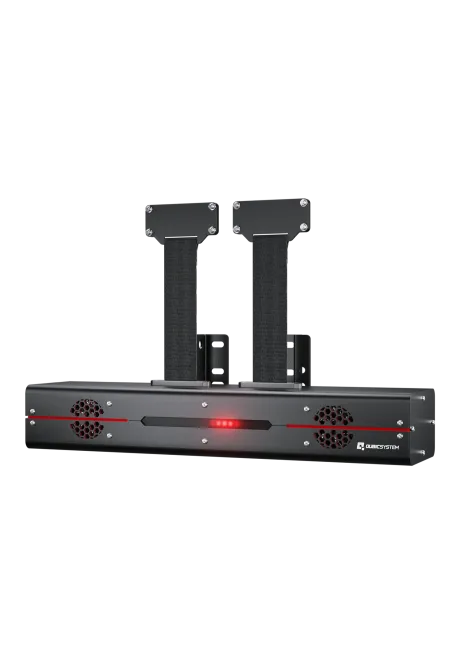
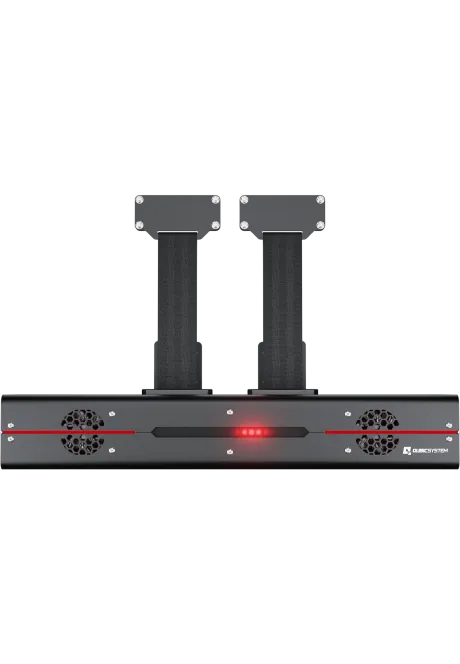
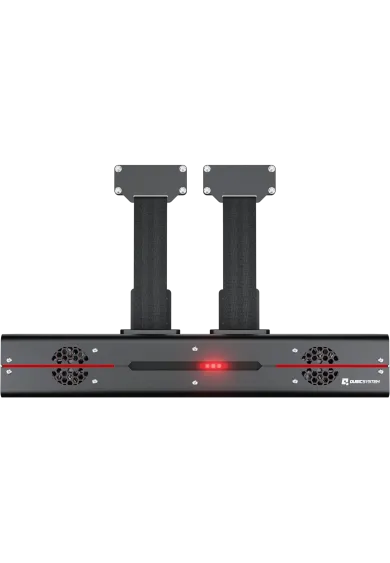
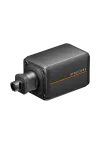
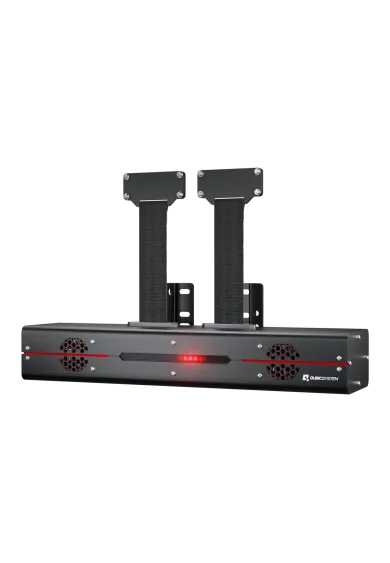
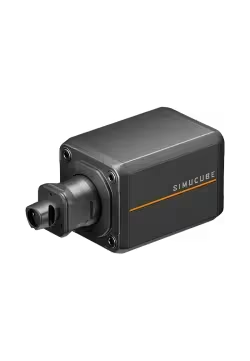
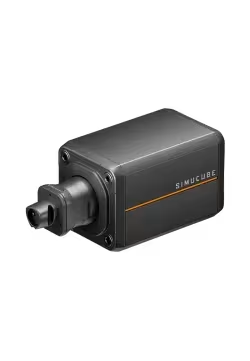
Qubic System QS-BT1 front side view
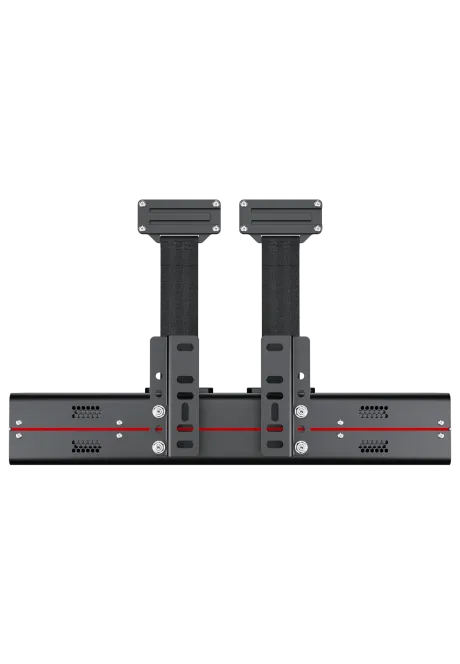
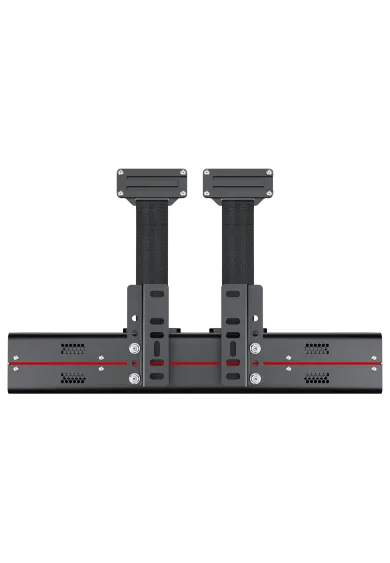
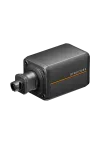
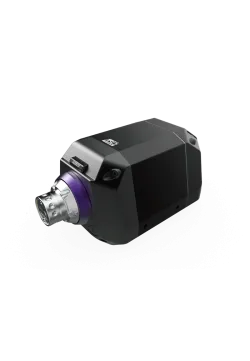
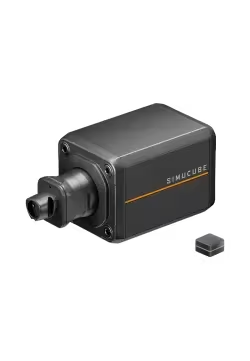
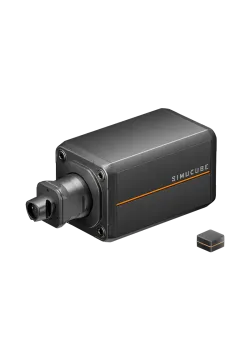
Qubic System QS-BT1 rear view
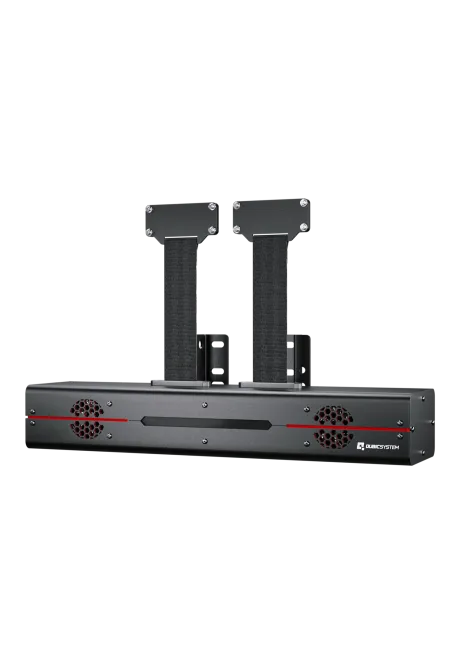
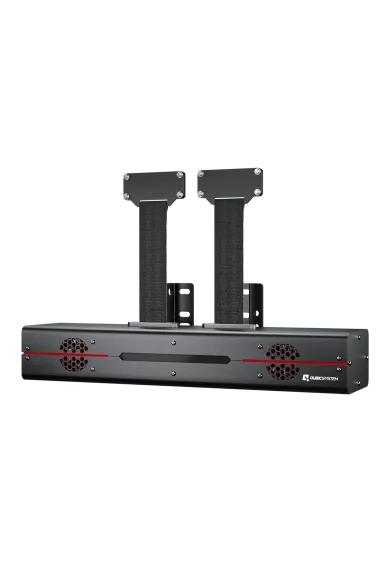
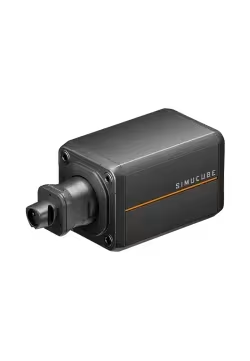
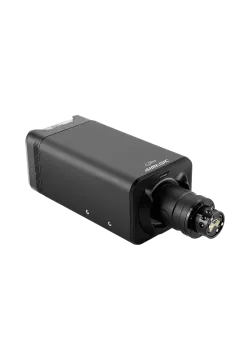
Qubic System QS-BT1 front side view led off
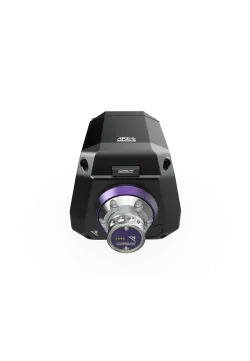
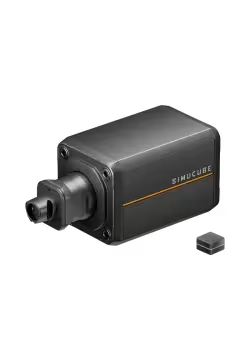
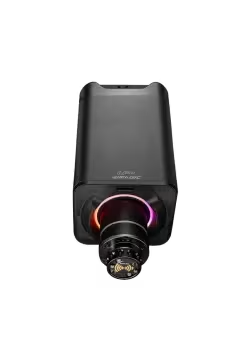
Qubic System QS-BT1 front view
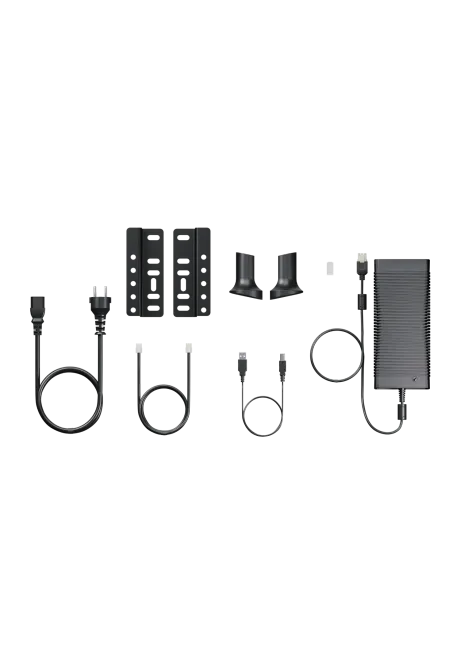
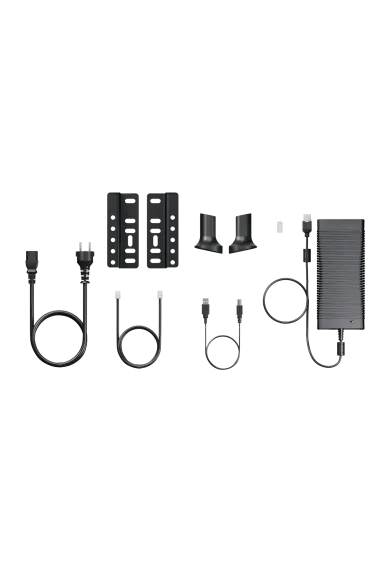
Qubic System QS-BT1 power cables
  • New
Qubic System QS-BT1 front side view
Qubic System QS-BT1 rear view
Qubic System QS-BT1 front side view led off
Qubic System QS-BT1 front view
Qubic System QS-BT1 power cables

Qubic System QS-BT1

QS-BT1
6,008.13zł

6,008.13zł

Ready to send

Qubic System QS-BT1 is a dual-channel Direct Drive belt tensioner that turns telemetry into pressure felt across the driver's shoulders. Each channel delivers up to 200 N, allowing the system to communicate braking, cornering, gear shifts, engine vibration and loss of grip. It works as a standalone device or alongside a motion platform, supports racing and flight simulators, and connects directly to a Windows PC through USB.
Ask about product
Zapytanie dotyczy produktu: Qubic System QS-BT1
* - pola obowiązkowe
You will receive an 60.08zł for each item of this product to use on your next purchase.
Close
Shipping within 24 hours
Secure payments
Return within 30 days
Delivery from PLN 0

Available accessories

- Plug and Play Accessories

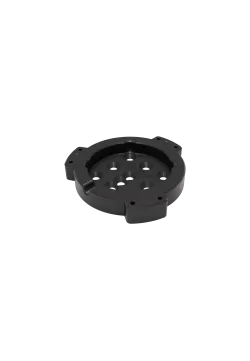
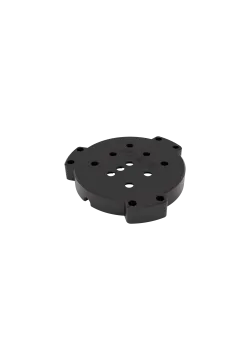
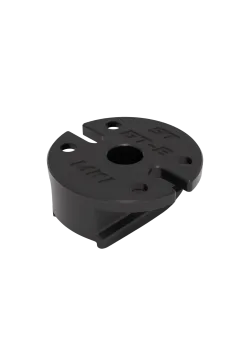
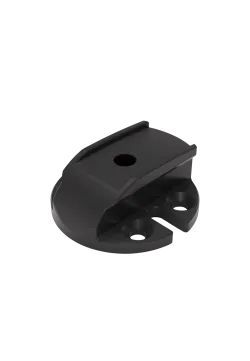
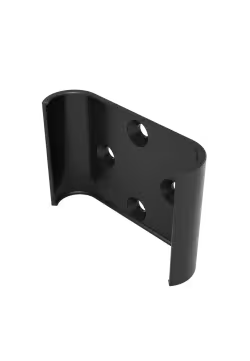
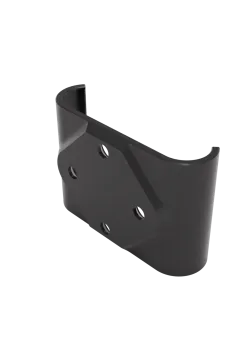
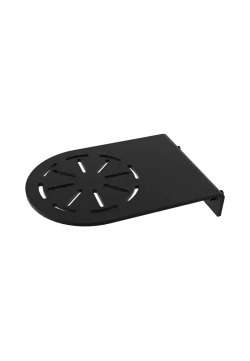
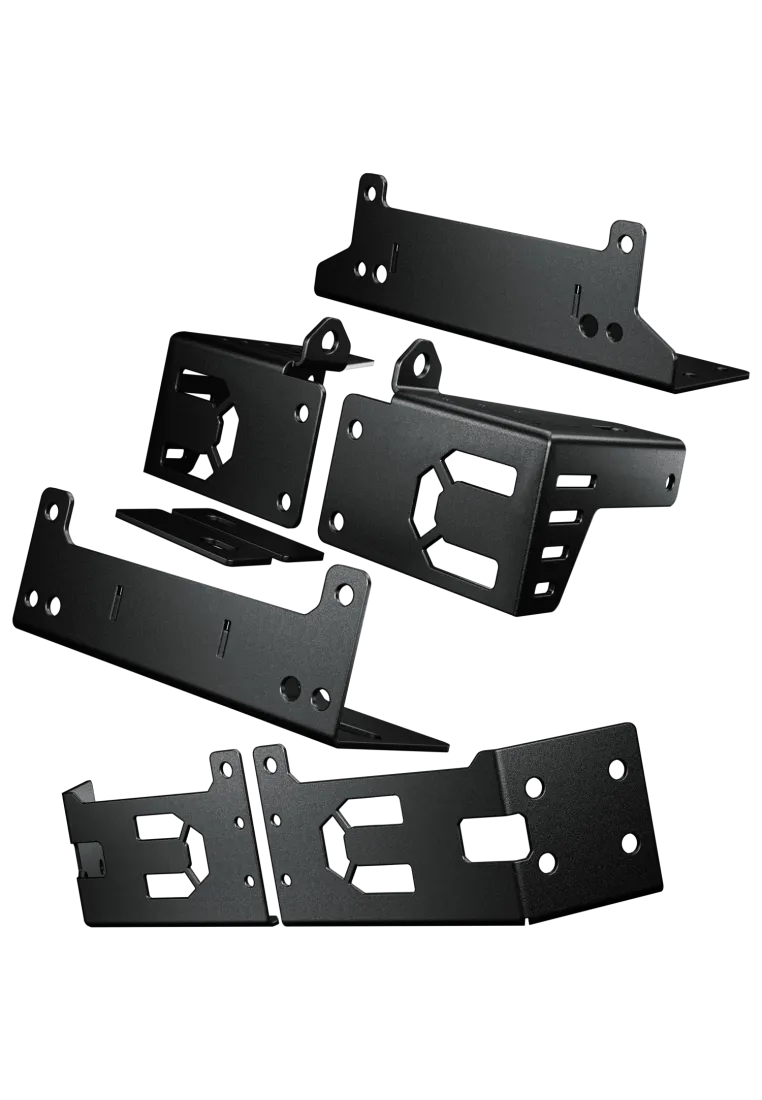
Qubic System Mount for QS-BT1

Qubic System Mount for QS-BT1 Shipping in 3-7 days

346.34zł
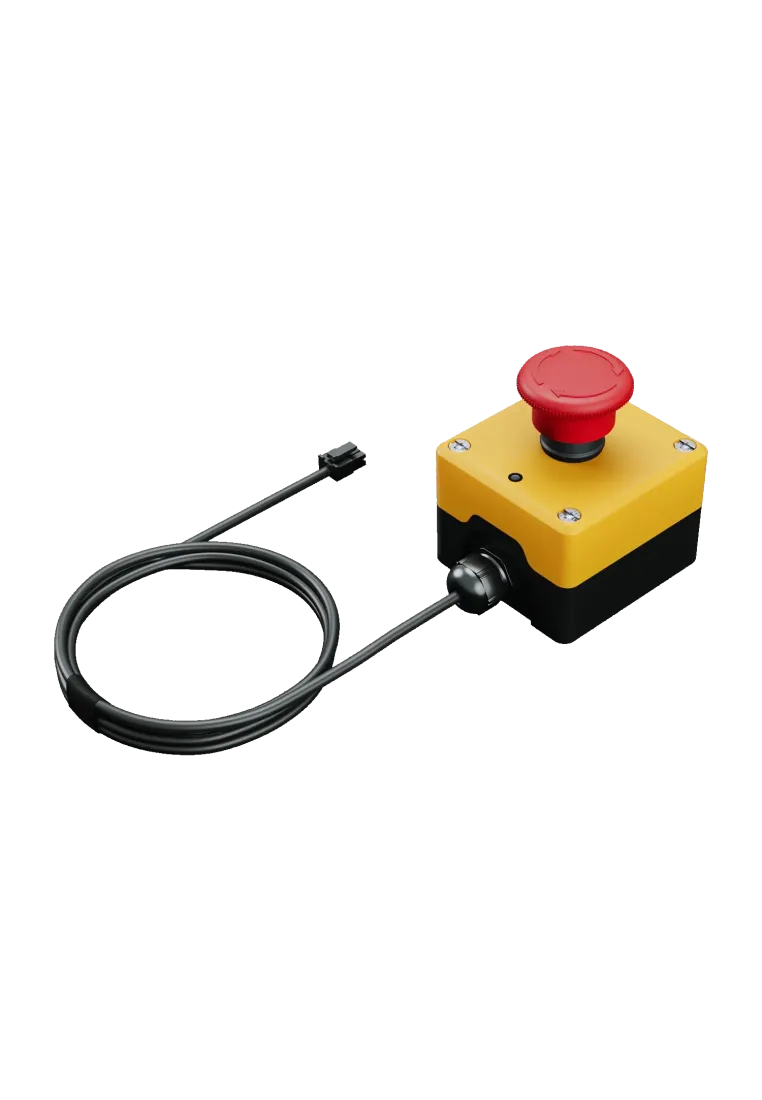
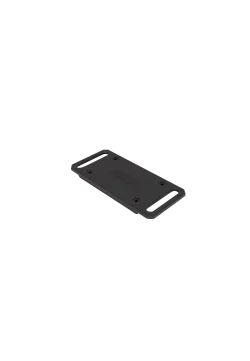
Qubic System Motion-Lock Switch

Qubic System Motion-Lock Switch Shipping in 3-7 days

346.34zł
 

Want to feel more? Still feel like something’s missing from your sim rig?

Braking you can feel across your shoulders

Under heavy braking, the QS-BT1 shortens both shoulder belts and presses the driver into the seat. There is no need to watch a gauge or wait for the tyres to slide. Increasing pressure across the shoulders adds another indication of how quickly the car is slowing and how close it is getting to the available grip.

Each channel can generate up to 200 N of pulling force. The effect can be kept gentle for road cars or made far more pronounced for competition machinery. Strength and response are adjustable in software, so one fixed setting does not have to cover every vehicle.

Left and right belts respond independently

The two motors are controlled separately. In a corner, one belt can tighten more than the other, creating a clear difference between left and right turns. It is a simple idea, but it quickly becomes an extra source of information that works without distracting the driver's eyes.

Asymmetric belt action can also make changes in vehicle balance easier to notice. When the rear begins to step out or the car is thrown into a rapid direction change, the harness does not react equally on both sides. The signal reaches the body before the situation becomes obvious on the display.

Telemetry delivered through the harness

The QS-BT1 does more than apply a steady pull. Using game telemetry, it can deliver short engine vibrations, rev-limiter pulses, wheel lock, wheel slip and road-surface effects. Each response can serve as useful information instead of becoming another source of random noise.

Sensible tuning makes the biggest difference. Stronger responses can be reserved for braking and sustained load, while smaller events stay lower in the mix. This keeps the harness from trying to say everything at once and makes important vehicle behaviour easier to recognise.

A physical pulse for every gear change

The tensioner can produce a short, decisive movement when a gear is selected. In a car with a hard sequential transmission, the result can resemble a driveline jolt. For a road car, the same response can be softened. Either way, the driver receives physical confirmation without looking at a display.

Separate profiles allow the response to suit downshifts and upshifts when the game's telemetry provides the required data. Combined with transmission sound and steering feedback, the short pulse gives each shift a clear place in the rhythm of a lap.

Standalone or paired with a motion platform

A motion platform is not required. The QS-BT1 can be installed on a rigid aluminium-profile cockpit, connected to the PC through USB and used as a separate feedback system.

If the rig already has motion, both systems can operate together. The platform moves the seat and cockpit, while the belts add pressure without consuming actuator travel. The QS-BT1 can be used with Qubic System, ForceSeat and Next Level Racing motion families, with mounting and control software chosen for the specific setup. A separately configured wind simulator can run alongside it as another independent effect.

Built for flight simulation too

The tensioner is not limited to four wheels. In flight simulators it can represent positive and negative G effects, roll, lateral acceleration, aerodynamic braking and responses linked to weapons or defensive countermeasures.

Together, the two channels provide up to 400 N of pulling force, giving a flight profile enough range to make different situations clearly distinct. It does not create real whole-body G-force, but it adds a consistent physical cue that works well with the image, audio, flight controls and a motion platform.

Seat geometry makes a real difference

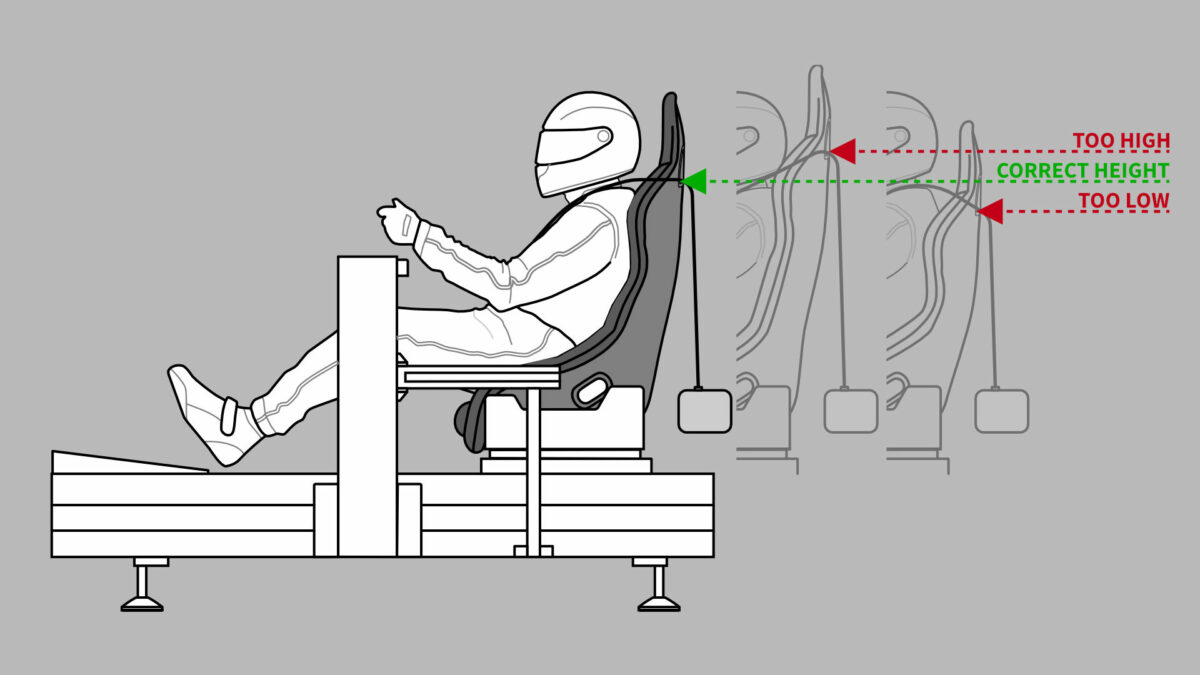
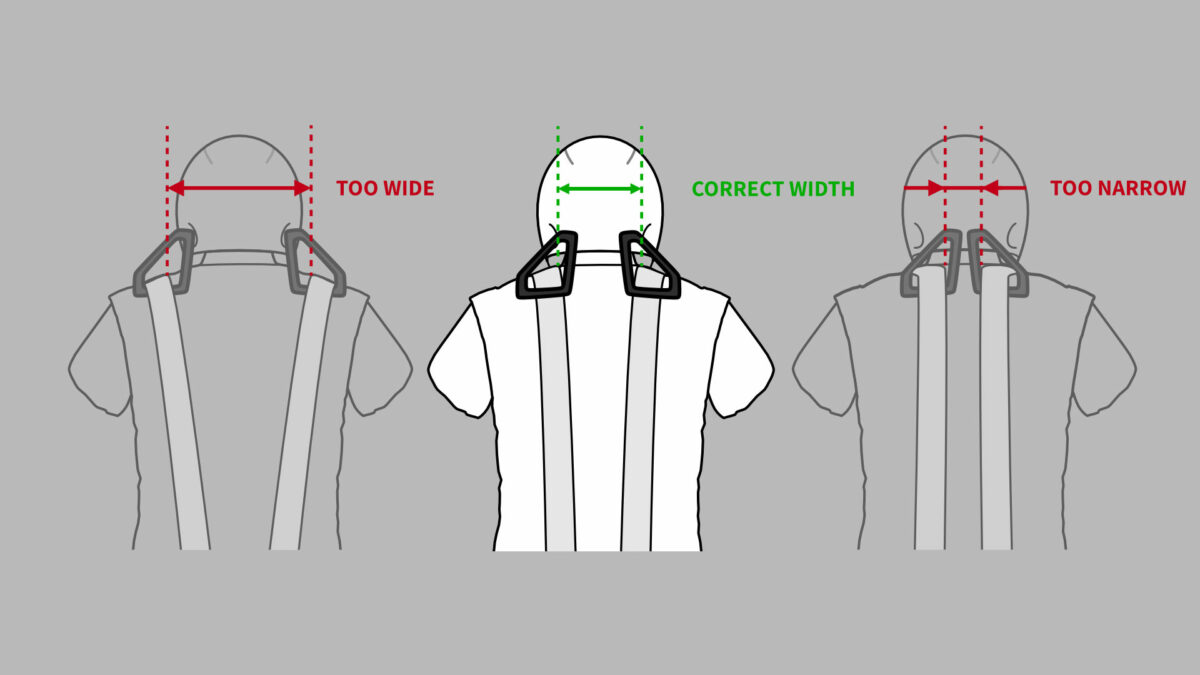
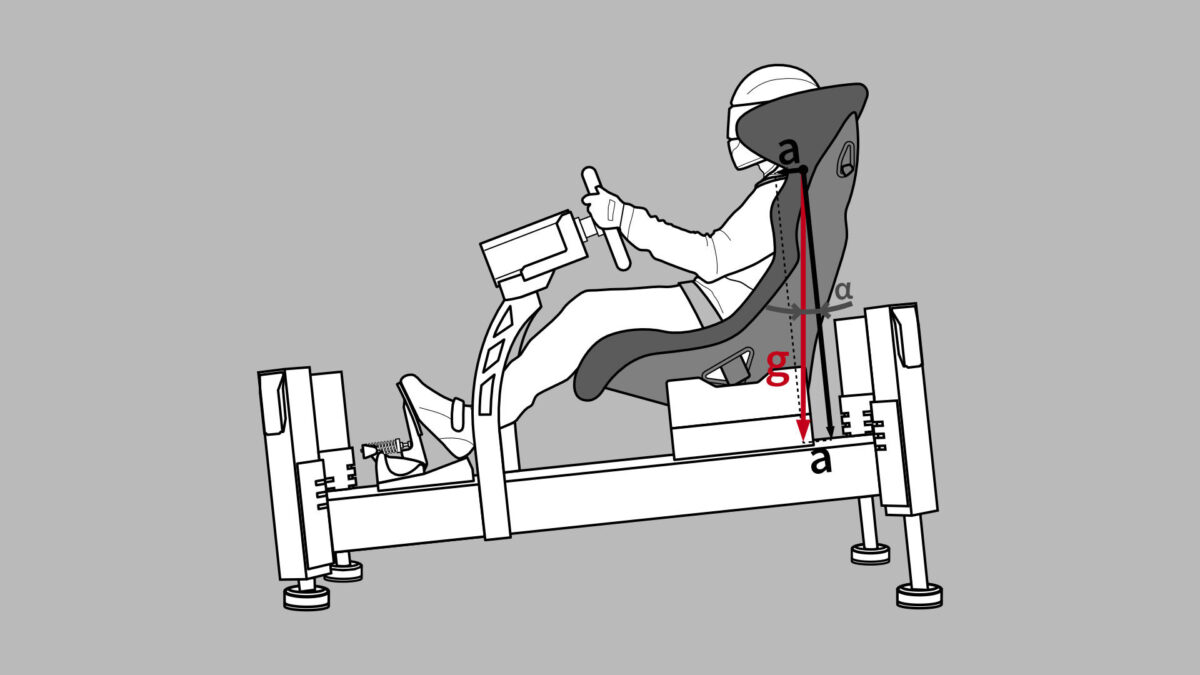
A seat with shoulder-belt openings at shoulder height gives the best result. If those openings sit too high or too low, the belt works at an unfavourable angle and may create discomfort instead of a clean, useful pull.

The unit should be positioned so that its guide belts have the straightest possible path to the seat. The current manual specifies 240 mm of belt extension when fully unwound for the latest revision. Installation requires a small amount of slack, followed by a final check with the driver seated, the harness fastened and the normal driving position set.

Qubic System QS-BT1 belt geometry
Qubic System QS-BT1 belt routing

Safe and comfortable belt routing

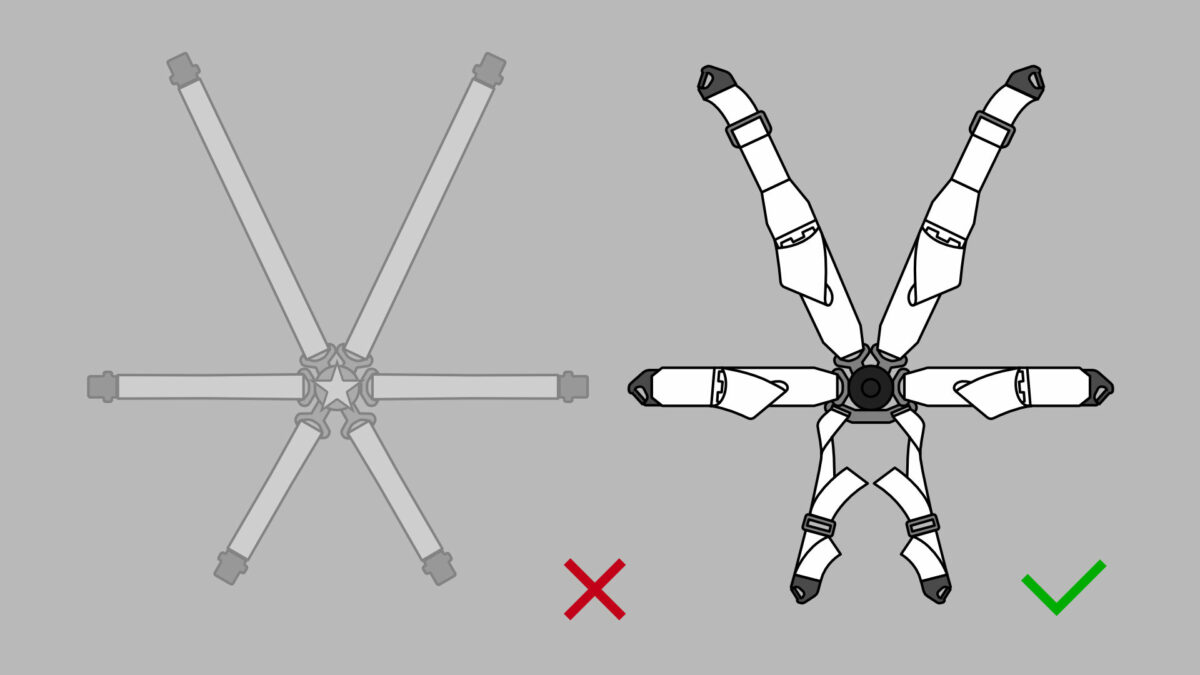
Shoulder belts need to lie across the shoulders rather than close to the neck. The manufacturer permits a routing angle of up to 45 degrees, although the system works most efficiently when the belt leaves the device as close to perpendicular as possible. Twisted webbing, a sharp seat edge or a tight opening adds friction and softens the response.

Two low-friction seat inserts are supplied. They guide the webbing, reduce wear and cut scraping noise during rapid motor movement. Their position should be checked again after the first few sessions, once the harness has settled into its normal path.

A harness ready for 200 N per side

The QS-BT1 works with 2-inch and 3-inch belts, but the racing harness itself is not included. Qubic System recommends an adjustable 5- or 6-point harness, preferably meeting FIA requirements. Adjustment allows the shoulder section to be set without squeezing the driver excessively while the system is idle.

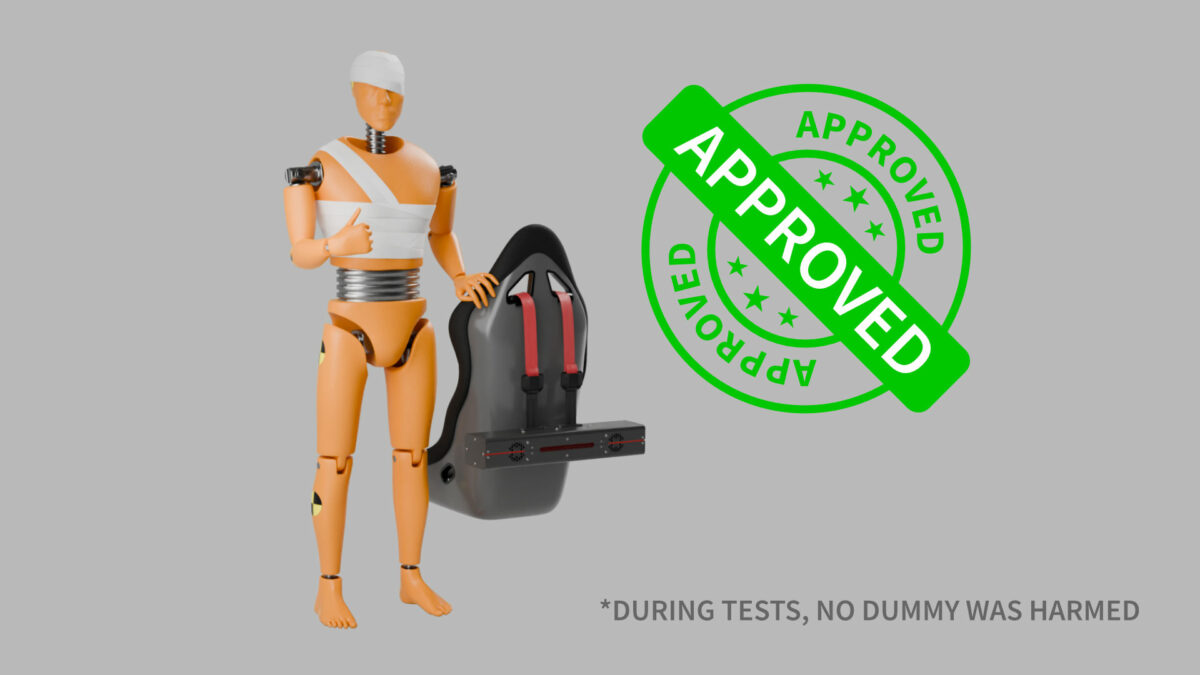
Harness anchor points must be part of the cockpit structure. The QS-BT1 housing does not replace a harness bar and is not a protective restraint for a real accident. Its purpose is to create simulation effects only.

Qubic System QS-BT1 harness
Qubic System QS-BT1 quiet work

Quiet enough for long sessions

Normal operating noise remains below 50 dB. In the manufacturer's measurements at full intensity with the belt under tension, readings were approximately 42-48 dB depending on the measurement position.

That matters during long practice runs and endurance events, where unnecessary mechanical noise becomes tiring. Correct belt routing and the supplied inserts reduce rubbing against the seat. Fast pulses will still be audible, especially in a quiet room or when using open-back headphones.

Cooling designed for changing loads

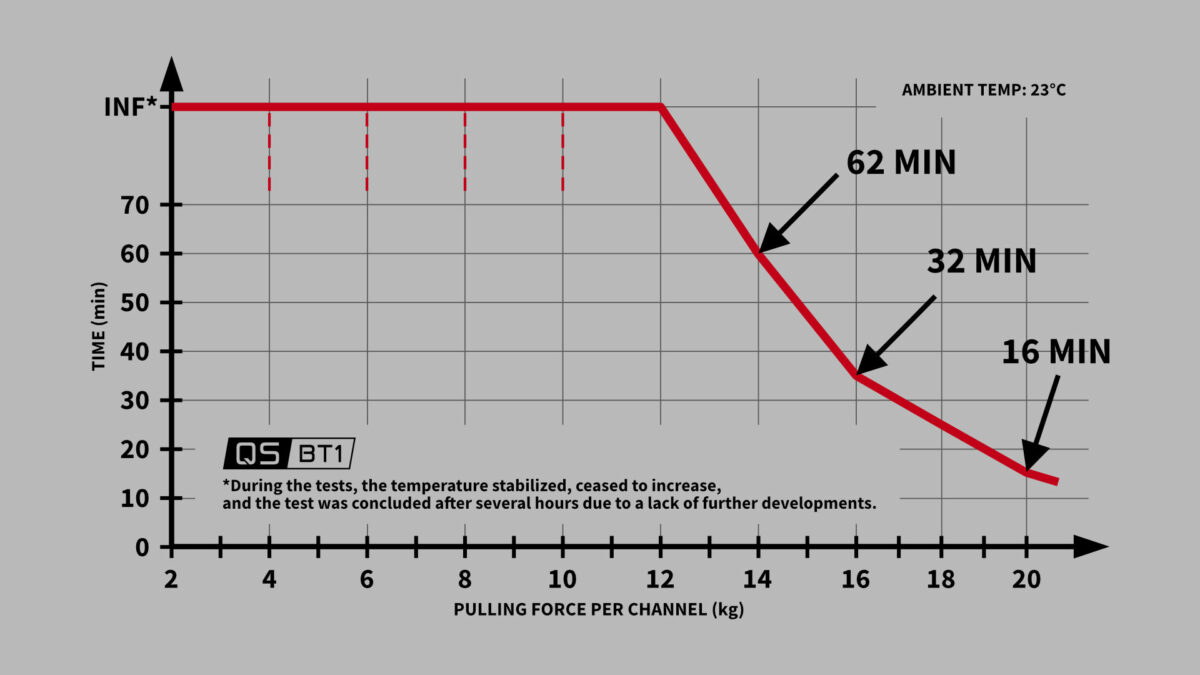
In normal driving, the motors do not pull at maximum force continuously. Braking, direction changes and short pulses alternate with lighter loads. The manufacturer also validates the device with demanding constant-tension tests that are tougher than a typical telemetry profile.

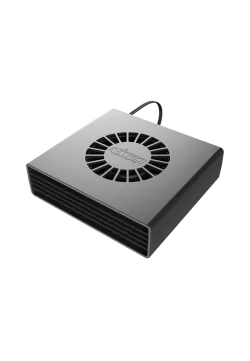
Airflow still matters. The manual requires at least 15 cm behind the ventilation openings, 3 cm at the front and about 9 cm below the connectors. Enclosing the unit in a sealed box or covering the vents can shorten operation and trigger thermal protection.

Qubic System QS-BT1 cooling
Qubic System QS-BT1 immersion without tilting

Sustained acceleration without tilting the cockpit

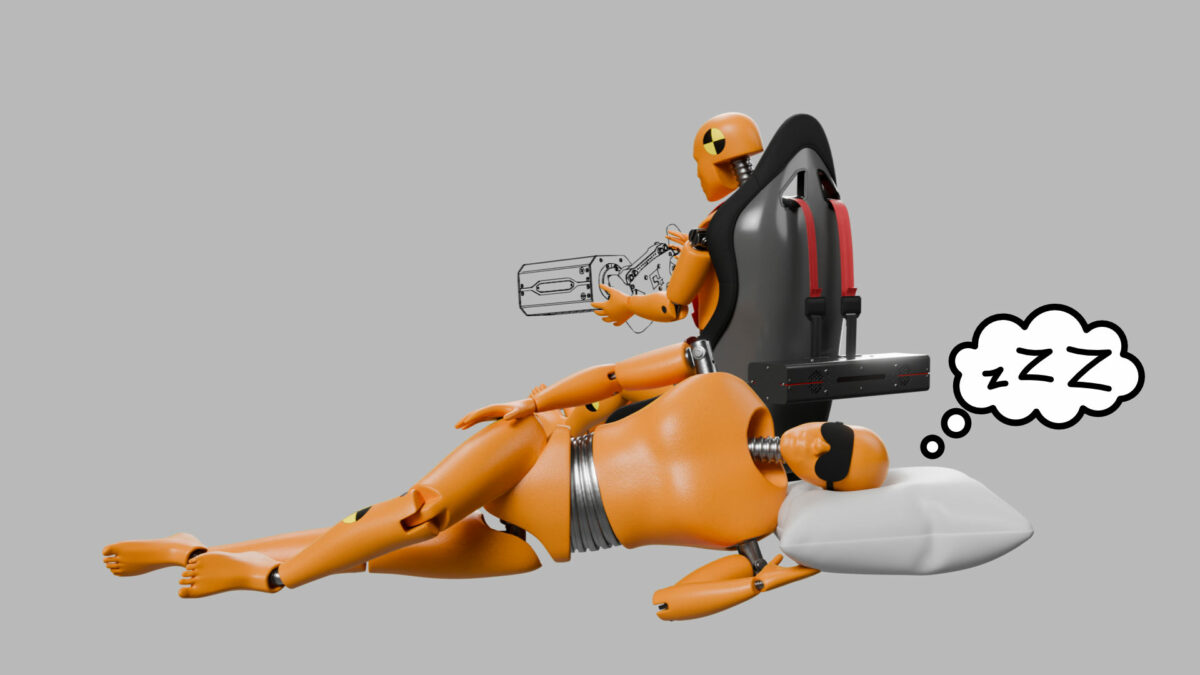
A motion platform is excellent at delivering rapid movement, but its travel is limited. Once it tilts, it has to return towards its centre position, so a long braking zone or a wide corner cannot use full actuator travel continuously.

A belt tensioner works differently. It can maintain shoulder pressure for as long as the telemetry calls for it without changing the seat position. The two technologies therefore complement each other: motion moves the complete rig, while the QS-BT1 preserves the sustained braking or lateral-load cue.

Motion-Lock and software safeguards

Global Pause is active after startup. The belts remain released until the user resumes the system, and a game pause lasting more than five seconds returns them to a safe state. Tension is also released when the title is closed.

The QS-BT1 supports Motion-Lock, a wired operating lock. A jumper and interlink cable are included, while the external switch is not supplied. These functions do not replace correct installation, regular harness inspection or the ability to release the buckle quickly.

Qubic System QS-BT1 safety first
Qubic System QS-BT1 sim racing

Effects available in racing simulators

The available effects depend on the telemetry exposed by each game and on the selected profile. In supported titles, the QS-BT1 can communicate:

  • braking force and longitudinal load,
  • lateral load through a corner,
  • gear shifts and engine vibration,
  • rev-limiter pulses,
  • wheel lock and wheel slip,
  • oversteer and lateral slide,
  • vertical load and surface impacts,
  • a brief pre-crash belt pull.

Each response can be adjusted in QubicManager. Starting with moderate values and increasing them after a few laps usually produces a clearer result than turning every slider up immediately.

Effects available in flight simulators

Flight profiles use both channels together with aircraft or helicopter telemetry. Depending on game support, the system can reproduce:

  • positive and negative G effects,
  • lateral acceleration and roll-related load,
  • deceleration and airbrake operation,
  • gun or cannon fire,
  • missile launch,
  • flare and chaff deployment.

The profile can run without a motion platform or alongside an existing system. The belts then add pressure across the body while the actuators focus on moving the whole cockpit.

Qubic System QS-BT1 flight sim
Parameter Details
Manufacturer Qubic System
Model QS-BT1
Type Dual-channel Direct Drive belt tensioner
Use Racing and flight simulators
Channels 2, independently controlled
Maximum pulling force 200 N per channel, up to 400 N combined
Compatible belt width 2 and 3 inches
Recommended harness Adjustable 5- or 6-point harness, preferably FIA compliant; harness not included
PC connection USB
Platform Windows PC
Software QubicManager; ForceSeatPM or Next Level Racing Platform Manager depending on configuration
Device dimensions 561 x 99 x 138 mm
Device weight 13 kg without cockpit mounting adapters
Rated power 321 W
Power supply 100-240 V AC, 50-60 Hz input; 24 V DC, max. 15 A / 360 W output
Protection class I
Noise level Below 50 dB during normal operation
Operating and storage temperature 5-40°C; full performance from 5-35°C
Humidity 0-70%, non-condensing
Maximum operating altitude 2,000 m above sea level
Included USB cable length 3 m
Motion-Lock interlink cable length 2 m
Lighting RGB
Made in Poland, European Union
Compliance CE, FCC Class B
System or rig Compatibility and conditions
Cockpit without motion Supported. The QS-BT1 can operate as a standalone system.
Aluminium-profile cockpit Supported. A universal profile adapter is included.
Qubic System QS-H13, QS-210, QS-220, QS-CH2, QS-S25, QS-S35 and QS-V20 Supported. Installation method and adapter requirements depend on the cockpit.
ForceSeat PS-6TM, PS-6TL, PS-3TM and PS-2RM Supported. ForceSeatPM is recommended for these motion platforms.
Next Level Racing Motion Platform V3, Motion Plus and Traction Plus Supported. Next Level Racing Platform Manager is recommended; Motion Platform V3 requires the appropriate bracket.
Third-party motion platforms The QS-BT1 can run in parallel as an independent device. Check mounting position, cable routing and structure movement.
2-inch and 3-inch belts Supported. An adjustable 5- or 6-point harness is recommended.
Consoles No confirmed support. The manufacturer specifies a Windows PC.
Configuration QubicManager ForceSeatPM NLR Platform Manager
QS-BT1 without a motion platform Supported Supported Supported
Qubic System motion platform Recommended Supported No native QS platform control
ForceSeat PS motion platform Supported Recommended No native PS platform control
Next Level Racing motion platform Supported Supported Recommended
Item Details
Qubic System QS-BT1 Complete dual-channel belt tensioner
Power supply and mains cable 24 V DC power supply and regional mains lead
USB cable 3 m cable for connection to the PC
Universal aluminium-profile adapter Adapter and hardware for basic profile-cockpit installation
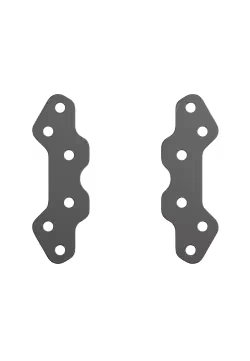
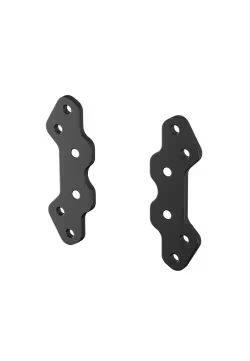
Belt attachment parts Two attachments with matching bolts, nuts and washers
Low-friction seat inserts 2 pieces with hook-and-loop mounting parts
Motion-Lock set Jumper and 2 m interlink cable; external switch not included
Racing harness Not included

1. Can the Qubic System QS-BT1 work without a motion platform?

Yes. It can operate as a standalone device on a rigid cockpit and connects directly to the PC through USB.

2. Is a racing harness included?

No. The harness is selected separately. Qubic System recommends an adjustable 5- or 6-point set, preferably FIA compliant.

3. How much force does the QS-BT1 produce?

Each independent channel delivers up to 200 N, providing up to 400 N of combined pulling force.

4. Which belts fit the device?

It accepts 2-inch and 3-inch shoulder belts. The harness must be adjustable and anchored to the cockpit structure.

5. Is the QS-BT1 suitable for flight simulators?

Yes. Depending on game telemetry, it can communicate G effects, roll, aerodynamic braking and weapon-related responses.

6. How is the unit mounted to a cockpit?

A universal adapter for aluminium-profile cockpits is supplied. Some motion platforms require a separate dedicated bracket.

7. Which programs support the QS-BT1?

QubicManager is the primary application. Depending on the complete configuration, the device can also work with ForceSeatPM and Next Level Racing Platform Manager.

8. Does the tensioner work on consoles?

The manufacturer confirms Windows PC operation. Console support is not specified.

9. Is a Motion-Lock button supplied?

No. The package contains the jumper and interlink cable, but the external button must be sourced separately.

10. Does the QS-BT1 replace a safety restraint?

No. It is an entertainment and training device, not a protective restraint. The harness must be anchored to proper points in the cockpit structure.

No reviews

You might also like
Products from same category

Product added to wishlist
Product added to compare.