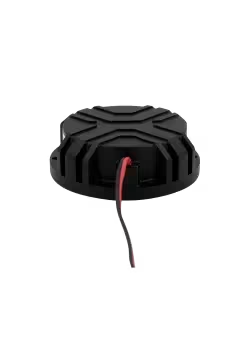
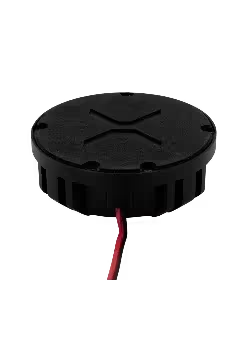
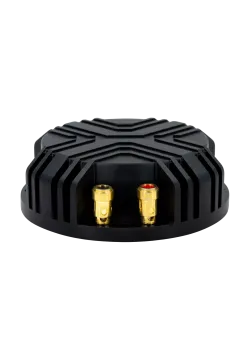
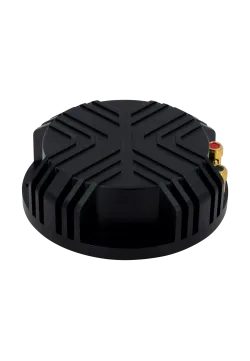
Xcite – High-Performance Bass Shakers for Sim Racing and Flight Simulation
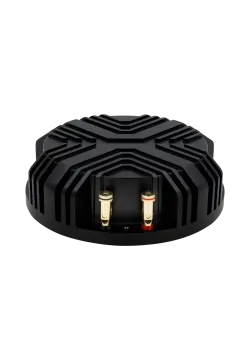
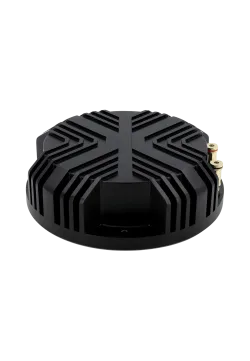
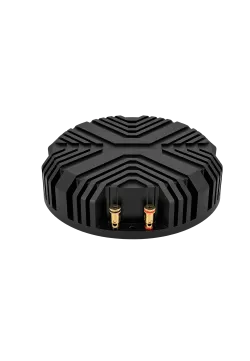
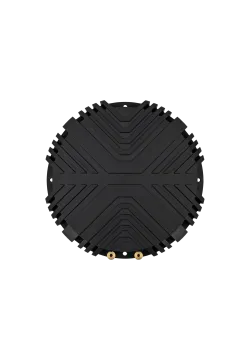
Xcite develops advanced tactile transducers designed to deliver powerful, precise vibration feedback without requiring the bulky housings traditionally associated with high-output bass shakers. The brand focuses on slim designs, efficient neodymium motor systems and advanced mechanical engineering to create compact devices capable of producing substantial physical force.
At Simline.eu, the Xcite range includes four bass shakers: XBS25-4, XBS50-4, XBS100-4 and XBS200-4. Each model provides a different combination of size, excursion and output, making it possible to build anything from a compact pedal feedback system to an advanced multi-zone tactile installation.
Xcite bass shakers convert an amplified audio signal into mechanical movement. When attached to a racing seat, pedal deck or cockpit frame, they allow drivers to feel engine vibration, gear changes, kerb strikes, road texture, wheel slip and ABS intervention without relying on loud speakers or subwoofers.
These transducers can also be used in flight simulation, gaming chairs, VR installations and home theatre systems where physical low-frequency feedback enhances immersion.
SpiderCore Technology – Powerful Feedback in an Ultra-Slim Design
One of the defining features of Xcite bass shakers is the manufacturer's proprietary SpiderCore motor architecture.
In conventional tactile transducers, the suspension system often occupies additional space above the motor. Xcite integrates the suspension closer to the motor core, reducing overall height while preserving the mechanical excursion needed for strong tactile output.
The construction combines neodymium magnets, four-layer voice coils and double steel suspension components. Aluminium housings help dissipate heat during operation, while the transducers themselves carry an IP66 protection rating.
This design makes it easier to install a shaker beneath a seat, on a pedal platform or within a compact aluminium-profile cockpit where a taller device might interfere with other hardware.
Xcite also uses KLIPPEL measurement technology to evaluate transducer behaviour under different operating conditions. This allows the manufacturer to analyse movement, distortion and performance at both lower and higher signal levels.
Xcite XBS25-4 – Compact Bass Shaker for Pedals and Localised Effects
The Xcite XBS25-4 is the most compact model in the range available from Simline.eu.
Measuring just 75 mm in diameter and 25 mm in height, with a weight of only 196 g, it can be installed in locations where a larger tactile transducer would be impractical.
Despite its dimensions, XBS25-4 provides ±6 mm of mechanical excursion and up to 93.1 N of peak force. Its frequency range extends from 22 Hz to 1 kHz, making it suitable for low-frequency vibration as well as short, clearly defined tactile pulses.
The XBS25-4 is particularly useful when mounted to a pedal deck, heel plate, seat backrest or steering wheel mounting structure. In multi-zone installations, each small shaker can be assigned a separate purpose.
For example, one transducer can reproduce ABS intervention, another can provide front-wheel slip feedback, while additional units can communicate gear changes or engine vibration.
The manufacturer's specifications distinguish between a 25 W RMS Noise Test rating and 125 W of long-term maximum power. These figures describe different test conditions and should not be treated as equivalent continuous amplifier power ratings.
For smaller installations, a suitably configured Fosi Audio TB10A or Nobsound NS-01G PRO amplifier can be considered, with output levels adjusted carefully to avoid overdriving the transducer.
Xcite XBS50-4 – Versatile Tactile Feedback for Racing Seats
For drivers looking for stronger feedback without significantly increasing the size of the installation, the Xcite XBS50-4 offers a useful middle ground.
The transducer measures 104 mm in diameter and only 35 mm in height. It delivers ±9 mm of mechanical excursion and up to 155 N of peak force, making it suitable for racing seats and rigid pedal platforms.
Its 17 Hz to 1 kHz frequency range allows it to reproduce deeper impulses than the smaller XBS25-4 while retaining the responsiveness required for shorter effects.
When installed beneath a racing seat, XBS50-4 can reproduce engine vibration, road surface changes, kerb impacts and gear-shift pulses. The physical feedback passes through the seat structure, allowing the driver to distinguish different effects without increasing audio volume.
XBS50-4 is also an interesting alternative to the popular Dayton Audio BST-1, particularly where low mounting height and mechanical excursion are priorities.
The manufacturer specifies 50 W for the RMS Noise Test and 250 W for long-term maximum power. These values should be interpreted according to the published test conditions rather than as interchangeable RMS ratings.
The Fosi Audio TB10A is one possible amplifier for one or two XBS50-4 units, provided the output is configured to remain within safe operating limits.
Xcite XBS100-4 – Strong Tactile Output for Larger Cockpits
The Xcite XBS100-4 is designed for more demanding tactile feedback installations.
It produces up to 324 N of peak force and 215 N of average force, with ±12 mm of mechanical excursion. These figures make it suitable for generating substantial physical feedback through a larger seat or rigid cockpit component.
The aluminium housing measures 156 mm in diameter and 48.5 mm in height. With a weight of approximately 1570 g, the XBS100-4 requires a sturdy mounting plate or bracket.
Its frequency range extends from 11 Hz to 1 kHz, while a resonant frequency of 22.1 Hz supports strong low-frequency vibration.
In a racing simulator, the XBS100-4 can reproduce heavy engine vibration, suspension impacts, road irregularities and powerful gear-change pulses. It is particularly suitable for larger aluminium-profile cockpits and heavier racing seats.
The specifications list 100 W for the RMS Noise Test and 500 W for long-term maximum power. The 500 W figure should not be described as continuous RMS power.
To make effective use of its performance, the amplifier should be selected according to its real output into a 4-ohm load, along with the intended intensity, cooling requirements and mechanical installation.
Xcite XBS200-4 – Flagship Bass Shaker with 920 N Peak Force
The most powerful Xcite model available from Simline.eu is the Xcite XBS200-4.
This high-output tactile transducer is intended for installations where smaller bass shakers cannot transfer sufficiently strong impulses through a large or heavy structure.
XBS200-4 produces up to 920 N of peak force and 650 N of average force. Its ±15 mm mechanical excursion provides substantial movement for deep, physical feedback.
The resonant frequency of 21.1 Hz helps support strong low-frequency effects, making the transducer suitable for demanding sim racing, flight simulation and home theatre applications.
Despite its high output, the housing measures just 230 mm in diameter and 62 mm in height. This relatively slim design provides more mounting flexibility than many traditional high-power transducers.
However, with a weight of approximately 4.84 kg and substantial mechanical force, the XBS200-4 requires a properly reinforced mounting structure.
The technical specifications distinguish between a 200 W RMS Noise Test rating and 1000 W of long-term maximum power. The latter must not be interpreted as an RMS amplifier power requirement or rating.
A suitable external amplifier capable of safely driving a 4-ohm load is essential. Compact amplifiers typically used with entry-level bass shakers will not provide the full performance available from XBS200-4.
This makes XBS200-4 particularly attractive for large racing cockpits, demanding flight simulators, VR motion installations and home theatre systems where strong body-level tactile feedback is a priority.
Xcite Bass Shaker Comparison – XBS25, XBS50, XBS100 and XBS200
All four models use a nominal impedance of 4 ohms and feature a low-profile design. The main differences are their physical size, mechanical excursion, output force and amplifier requirements.
| Specification |
XBS25-4 |
XBS50-4 |
XBS100-4 |
XBS200-4 |
| Nominal impedance |
4 Ω |
4 Ω |
4 Ω |
4 Ω |
| RMS Noise Test |
25 W |
50 W |
100 W |
200 W |
| Long-term maximum power |
125 W |
250 W |
500 W |
1000 W |
| Peak force |
93.1 N |
155 N |
324 N |
920 N |
| Average force |
37.7 N |
78 N |
215 N |
650 N |
| Mechanical excursion |
±6 mm |
±9 mm |
±12 mm |
±15 mm |
| Frequency range |
22 Hz – 1 kHz |
17 Hz – 1 kHz |
11 Hz – 1 kHz |
10 Hz – 1 kHz |
| Diameter |
75 mm |
104 mm |
156 mm |
230 mm |
| Height |
25 mm |
35 mm |
48.5 mm |
62 mm |
| Weight |
196 g |
540 g |
1570 g |
4842 g |
The two power ratings refer to different IEC 60268-5 test conditions and must not be interpreted as identical continuous amplifier output specifications.
How to Connect Xcite Bass Shakers to SimHub
All Xcite bass shakers are passive tactile transducers. They do not contain a built-in amplifier, USB sound card or digital telemetry interface.
To operate a shaker, you need a suitable external amplifier, speaker cable and a source of audio signals.
In a typical PC sim racing installation, SimHub receives supported telemetry data from the simulator. Its ShakeIt Bass Shakers feature converts selected vehicle events into audio signals that can be assigned to different channels.
The computer sends these signals through a sound card or compatible audio interface to the amplifier, which then drives the Xcite transducer.
For example, a shaker beneath the racing seat can reproduce engine vibration and kerb strikes, while a smaller transducer mounted to the pedal platform provides ABS and front-wheel slip feedback.
Users can adjust effect intensity, frequency filters and channel assignments in software. The availability and accuracy of individual telemetry effects depend on the simulator being used.
Choosing an Amplifier for Xcite Bass Shakers
Amplifier selection should take into account the shaker's impedance, intended output level and installation requirements.
All four Xcite models available at Simline.eu have a nominal impedance of 4 ohms, so the amplifier must be capable of operating safely with that load.
For compact installations using XBS25-4, the Nobsound NS-01G PRO is one possible choice.
This compact stereo amplifier offers USB, AUX and Bluetooth connectivity and can be used with appropriately matched lower-power transducers.
The Fosi Audio TB10A is another option. Its two-channel Class D design makes it possible to operate two compatible bass shakers with independently configured effects.
TB10A can be used with XBS25-4 or XBS50-4 when the output level is carefully controlled. Its maximum published power should not be confused with guaranteed continuous power under all operating conditions.
For XBS100-4, a higher-output amplifier may be necessary to take full advantage of the transducer's capabilities. XBS200-4 requires especially careful amplifier selection due to its high force and substantially greater potential power demand.
When connecting two 4-ohm shakers to a stereo amplifier, using one transducer per channel is a straightforward option. Do not bridge the amplifier channels or connect their negative terminals together unless the amplifier manufacturer explicitly supports that configuration.
Building a Multi-Zone Tactile Feedback System
One of the most useful features of a multi-channel tactile installation is the ability to assign different types of feedback to separate areas of the cockpit.
A small XBS25-4 mounted to a pedal deck can communicate ABS intervention, wheel lock-up and front-axle effects through the driver's feet.
An XBS50-4 beneath the racing seat can reproduce engine vibration, gear changes and road surface information.
For larger cockpits, an XBS100-4 or XBS200-4 can produce deeper, more powerful impulses through a substantial section of the frame or seat structure.
The final result depends on the stiffness of the mounting surface, the location of the transducers and the software configuration.
It is important to avoid excessive overlap between tactile zones. A well-positioned system with properly separated effects can provide more useful information than several powerful shakers all reproducing the same signal.
Xcite Bass Shakers for Flight Simulation and Home Theatre
Xcite transducers can also enhance flight simulation setups.
Depending on the simulator, aircraft and available software telemetry, tactile feedback can represent piston engine vibration, propeller movement, helicopter rotor effects, landing impacts and turbulence.
Microsoft Flight Simulator, X-Plane and DCS World users can build dedicated tactile systems around suitable audio and telemetry software. The transducers themselves do not interpret aircraft data and simply reproduce the amplified signals supplied to them.
Outside simulation, Xcite bass shakers can be installed in gaming chairs, VR equipment and home theatre seating.
In a home theatre setup, low-frequency audio effects can be converted into physical vibrations, helping reproduce the impact of explosions, powerful engines and cinematic sound effects without relying exclusively on loudspeaker output.
Mounting and Safe Operation of Xcite Tactile Transducers
For effective operation, a bass shaker should be securely attached to a rigid part of the simulator.
Depending on the model, this may be a metal seat plate, pedal mounting platform or aluminium-profile cockpit component.
Soft materials and flexible mounting brackets can absorb mechanical energy, reducing the amount of vibration transferred to the driver.
Larger models require additional attention. XBS100-4 and XBS200-4 generate substantial forces and must be installed using appropriately strong mounting hardware.
Cables should be routed to avoid moving seat mechanisms, motion actuators and other components that could pull or damage the connections.
Although the Xcite transducers themselves carry an IP66 rating, this protection does not automatically extend to the amplifier, speaker cables or other connected electronics.
Initial testing should begin with a low output level. Increase the intensity gradually while monitoring the mounting structure, transducer temperature and overall behaviour of the system.
Which Xcite Bass Shaker Should You Choose?
If you want compact feedback for pedals or a multi-zone installation, XBS25-4 is a practical starting point. Its small size allows it to fit in locations where larger transducers would be difficult to install.
XBS50-4 provides a versatile combination of compact dimensions and stronger seat feedback, making it an attractive choice for many home racing cockpits.
XBS100-4 is better suited to larger or heavier structures where greater mechanical excursion and stronger low-frequency output are required.
For demanding applications where maximum physical impact is the priority, XBS200-4 provides up to 920 N of peak force, although it requires an appropriately designed mounting system and amplifier.
When choosing a model, consider the mass of the component you want to vibrate, the space available for mounting, the number of independent feedback channels and the amplifier's real output capabilities.
Explore the complete Xcite bass shaker range at Simline.eu to build a tactile feedback system for your racing or flight simulator.
For further technical specifications and manufacturer documentation, visit the official Xcite Audio website.
Less

 English
 Polski