Shopping Cart
There are no more items in your cart
 English
  Polski
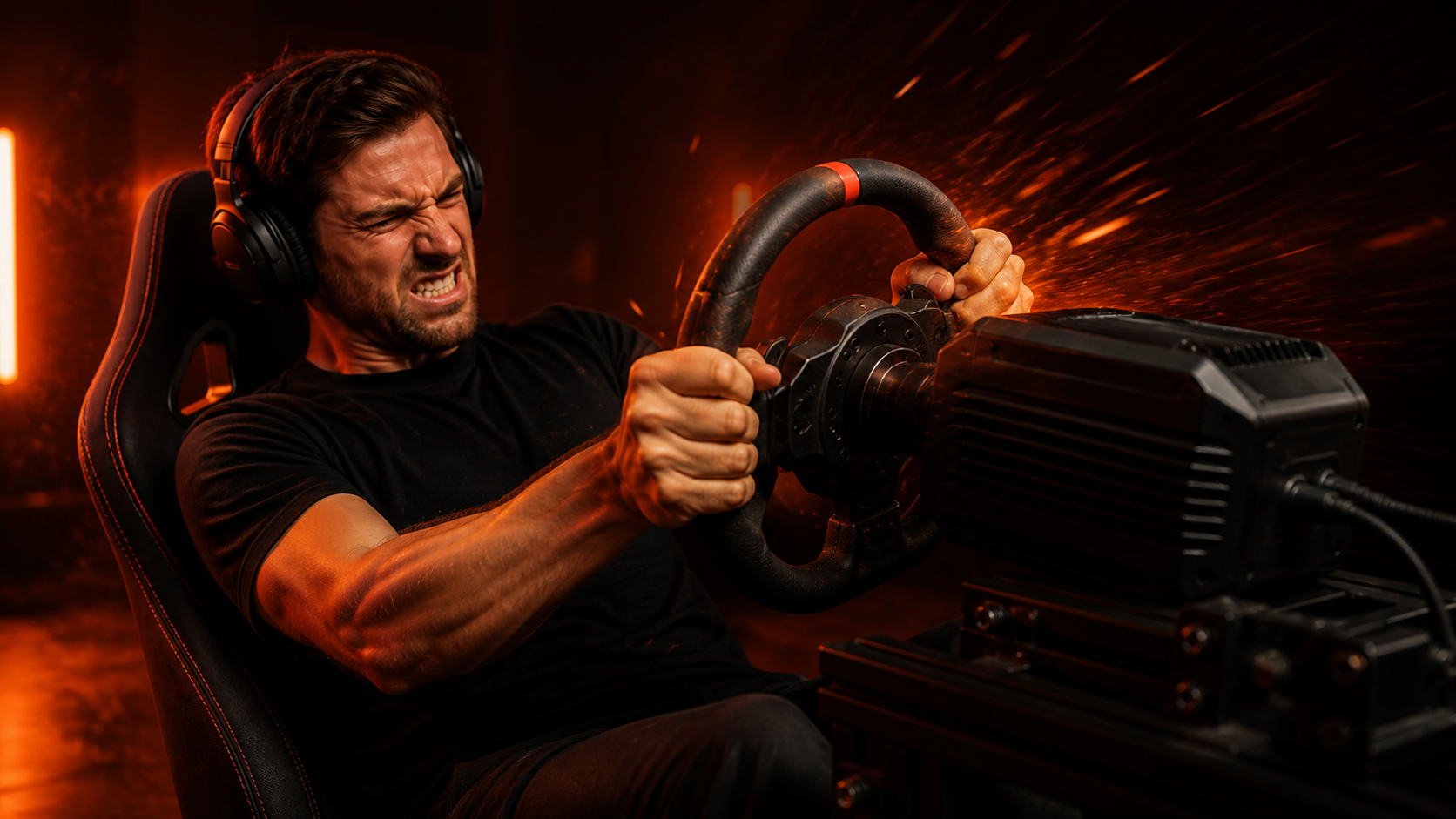 Image generated by AI.Buyer’s Guide • Direct Drive Wheelbases
How Many Nm Do You Really Need for Sim Racing? MOZA, Simagic, Simucube, VNM, Asetek & Conspit Compared
One of the first specifications people look at when buying a Direct Drive wheelbase is torque. 6, 9, 12, 15, 16, 18, 20, 21, 25, 27, 32 or even 35 Nm – the numbers look impressive, but what do they actually change behind the wheel? Does more torque automatically mean a better wheelbase? And how much power do you really need for GT3, Formula, prototype or endurance racing?
The answer becomes much more interesting when you stop looking only at torque and start comparing the motor technology, encoder, response behaviour, slew rate and actual FFB character of each wheelbase.
1. Torque Is Important – But Nm Alone Does Not Tell the Whole Story
Nm, or Newton-metres, describes the torque that the wheelbase motor can generate. More torque means more potential Force Feedback strength and, perhaps even more importantly, more headroom before the motor reaches its limits.
This headroom matters because a steering wheel does not always experience the same amount of force. A GT3 car in a slow corner may feel relatively light, while a fast high-downforce corner can generate a much larger steering load. Kerbs, crashes, rapid direction changes and sudden grip transitions can also create short but strong torque peaks.
A wheelbase operating constantly at its limit has less room to reproduce these peaks accurately. This is where clipping becomes important. A stronger wheelbase allows you to run the same perceived steering weight at a lower percentage of its maximum capability.
The important question is not simply “How many Nm do I need?”
A better question is: How much torque, response speed and FFB headroom do I need for the cars I drive, the steering wheel I use and the rig I have?
2. What Is Slew Rate and Why Does It Matter?
Slew rate describes how quickly a wheelbase can change its torque output. It is commonly expressed in Nm/ms.
This is different from maximum torque. Two wheelbases can produce a similar maximum torque while having very different abilities to change force rapidly.
A higher slew rate can make rapid FFB transitions feel more immediate. Think about catching an oversteer moment, hitting a kerb, unloading the front axle or feeling a rapid change in aerodynamic load. The wheel does not simply need to become “strong”; it needs to change its force quickly.
Important note about slew-rate figures
Slew-rate numbers are only included in this article when a reliable published source provides them. If a manufacturer does not publish an official slew-rate specification, the article explicitly says so instead of using an estimated or AI-generated number.
3. The 5–6 Nm Class – Entry-Level Direct Drive
Entry Level
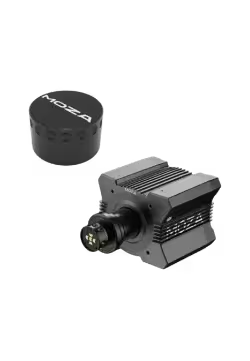
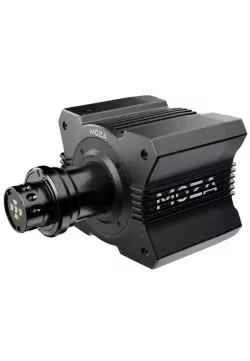
MOZA R5 Pro – 6 Nm
Torque 6 Nm peak
Encoder 21-bit
FFB NexGen 5.0
Slew Rate Not officially published
The MOZA R5 Pro represents the entry point of the range considered in this guide. Its 6 Nm motor is already a significant step above traditional gear-driven and belt-driven entry-level systems.
The R5 Pro is not about overwhelming the driver with force. Its biggest advantage is that it provides a clean Direct Drive foundation in a relatively compact package. It works especially well for desk setups, compact rigs and drivers who want their first serious DD system without requiring a very heavy cockpit.
FFB character: The R5 Pro feels relatively light and approachable. It is easy to drive with for long sessions and provides a clear step up from traditional entry-level wheelbases, but it does not have the physical authority or headroom of the larger bases. It is best viewed as an entry point rather than a final destination for an enthusiast building a serious high-end rig.
Technical source: MOZA official specifications .
4. 9–10 Nm – The First Serious All-Rounders
9–10 Nm
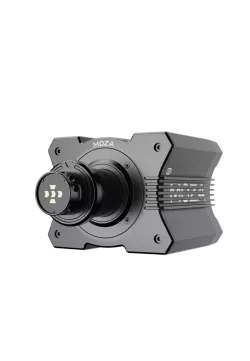
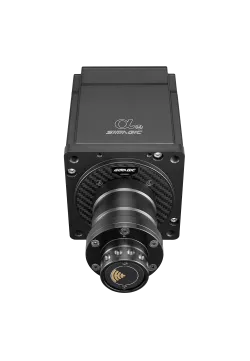
MOZA R9 V3 vs Simagic Alpha Mini vs Simagic Alpha EVO Sport
The 9–10 Nm segment is where Direct Drive starts becoming genuinely versatile. These bases are powerful enough for GT3, Formula, touring cars and prototypes while remaining physically manageable for many home rigs.
MOZA R9 V3 – 9 Nm
Torque 9 Nm peak
Encoder 21-bit magnetic
FFB NexGen 4.0
Slew Rate Not officially published
The MOZA R9 V3 uses a 21-bit magnetic encoder, 9 Nm of peak torque and an updated NexGen 4.0 FFB system. It also features intelligent active cooling and an upgraded conductive slip ring.
FFB character: The R9 V3 has a lively, energetic feel. It works particularly well when the driver wants a relatively direct steering response without moving into the heavier physical character of 12–18 Nm bases. It is a good match for smaller GT and Formula wheels.
Technical source: MOZA official R9 V3 specifications .
Simagic Alpha Mini – 10 Nm
Torque 10 Nm
Encoder 262,144 PPR
Processor 200 MHz
Slew Rate Not officially published
The Simagic Alpha Mini uses a custom five-pole servo motor, a 262,144 PPR encoder and a 200 MHz processor. Simagic specifies a 40 kHz response rate and a third-generation filter system.
FFB character: The Alpha Mini is compact but surprisingly clean. Its strength is not brute force; it is the combination of compact dimensions, high encoder resolution and a relatively crisp response. It feels more serious than its physical size suggests.
Technical source: Simagic official specifications .
Simagic Alpha EVO Sport – 9 Nm
Torque 9 Nm
Encoder 21-bit
Motor Ultra-low inertia motor
Slew Rate Not officially published
The Simagic Alpha EVO Sport is the 9 Nm entry point into Simagic's new Alpha EVO family. It uses a 21-bit encoder, an ultra-low-inertia motor and Simagic's updated electronics platform.
FFB character: The EVO Sport is aimed at a smoother and more controlled steering sensation. Instead of trying to feel extremely aggressive, it focuses on a refined response that works well for drivers who prefer a more polished and less raw FFB presentation.
Technical source: Simagic Alpha EVO official manual .
5. 12–13 Nm – The Sweet Spot for Many Enthusiasts
12–13 Nm
MOZA R12 V2, Simagic Alpha EVO and Asetek La Prima
MOZA R12 V2 – 12 Nm
Torque 12 Nm peak
Encoder 21-bit magnetic
FFB NexGen 4.0
Slew Rate Not officially published
The MOZA R12 V2 is one of the most balanced bases in the MOZA range. It combines 12 Nm of peak torque with a 21-bit magnetic encoder, a 216 W peak power rating and NexGen 4.0 FFB.
FFB character: The R12 V2 has a strong but controlled character. It gives enough force to make high-speed GT3 and Formula driving physically convincing without becoming excessive. Compared with the R9, it feels noticeably more planted and gives the driver more resistance when the front axle is heavily loaded.
Technical source: MOZA official R12 V2 specifications .
Simagic Alpha EVO – 12 Nm
Torque 12 Nm
Encoder 21-bit
Motor Ultra-low inertia
Slew Rate Not officially published
The Simagic Alpha EVO produces 12 Nm and uses Simagic's new ultra-low-inertia motor architecture and 21-bit encoder.
FFB character: The most important difference compared with the classic Alpha is the character of the FFB. The original Alpha is known for a very direct, almost “zero-to-one” response, while the EVO has a smoother and more damped feel. There is a subtle amount of damping built into the EVO's hardware behaviour, even when the software damping control is reduced. This gives the EVO a more polished steering response and makes it particularly attractive to drivers who prefer fluidity over an extremely raw FFB presentation.
Technical source: Simagic Alpha EVO official manual .
Asetek La Prima – 12 Nm
Torque 12 Nm
Slew Rate 4 Nm/ms
Encoder 22-bit absolute
Power 180 W
The Asetek La Prima brings 12 Nm into Asetek's premium ecosystem. Its 22-bit absolute sensor and 4 Nm/ms maximum torque slew rate give it a very different technical profile from simply chasing maximum torque.
FFB character: La Prima is designed around a clean and predictable premium feel rather than maximum physical aggression. It is particularly interesting for drivers who want a controlled, precise steering response and the possibility of moving into the wider Asetek ecosystem.
Technical source: Asetek official technical documentation .
6. VNM Premier – 13 Nm
VNM
VNM Direct Drive Premier – 13 Nm
Torque 13 Nm
Encoder 23-bit absolute
Motor 5-pole servo
Slew Rate Not officially published
The VNM Direct Drive Premier produces 13 Nm and uses a 23-bit absolute encoder together with a five-pole servo motor.
One of the interesting characteristics of the Premier is its focus on transmitting information from the front axle rather than simply producing a heavy steering wheel. The result is a base designed to communicate grip, load changes and front-end behaviour.
FFB character: Premier feels more mechanical and motorsport-oriented than its torque figure might suggest. It is particularly attractive to drivers who care about front-end information and want a relatively raw connection to what the car is doing.
Technical source: Simline VNM Premier technical information .
7. 15–16 Nm – The Real “Goldilocks” Zone
Recommended 15–16 Nm
Simagic Alpha, Simucube 3 Sport and MOZA R16 Ultra
Simagic Alpha – 15 Nm
Torque 15 Nm
Encoder High-resolution
Motor 5-pole servo
Slew Rate Not officially published
The Simagic Alpha sits at 15 Nm and is one of the most recognisable bases in Simagic's lineup.
FFB character: The classic Alpha is deliberately more raw than the Alpha EVO. Its steering response feels immediate and “zero-to-one”: when the simulation sends a force change, the motor does not try to make the transition feel overly soft. Drivers who like sharp front-end communication, strong self-aligning torque and a very direct steering connection often appreciate this character.
This is precisely why the Alpha and Alpha EVO should not be treated as identical bases with different housings. The EVO's smoother, more damped character makes it easier to live with for drivers who prefer fluidity, while the original Alpha has a more immediate, uncompromising response.
This is precisely why the Alpha and Alpha EVO should not be treated as identical bases with different housings. The EVO's smoother, more damped character makes it easier to live with for drivers who prefer fluidity, while the original Alpha has a more immediate, uncompromising response.
MOZA R16 Ultra – 16 Nm
Torque 16 Nm peak
Encoder 21-bit
Motor High-density flat-wire
Slew Rate Not officially published
The MOZA R16 Ultra is one of the most interesting bases in this entire comparison. It provides 16 Nm of torque, a high-density flat-wire motor, 21-bit encoder technology and MOZA's NexGen Force U1 algorithm.
FFB character: R16 Ultra focuses on a strong, dense steering sensation with enough headroom to keep high-downforce cars from feeling underpowered. Its character makes particular sense for GT3, LMP and Formula users who want substantial steering weight without stepping all the way into the 20–30+ Nm class.
Technical source: MOZA official R16 Ultra specifications .
Simucube 3 Sport – 15 Nm
Torque 15 Nm
Motor SPM Direct Drive
Encoder 23-bit absolute
Slew Rate Not officially published
The Simucube 3 Sport uses a new-generation SPM motor, 23-bit absolute encoder and Simucube's redesigned control architecture.
FFB character: The 3 Sport is less about raw aggression and more about precision and consistency. Its new-generation control system is designed to produce a sharper and more detailed signal, while the additional telemetry-based effects such as ABS, RPM and road texture give the software side of the system another layer of information.
Technical source: Simucube official specifications .
Why 15–16 Nm is such an interesting range
Around 15–16 Nm, the driver already has enough torque for serious GT3, Formula and prototype simulation. Going higher can still improve headroom and physical authority, but the jump from 9 to 16 Nm is generally more meaningful than the jump from 21 to 25 Nm. This is why the 15–16 Nm range is one of the strongest targets for a long-term home rig.
8. 18 Nm – A Serious Step Into High-End
18 Nm
Simagic Alpha EVO Pro, VNM Elite and Asetek Forte
Simagic Alpha EVO Pro – 18 Nm
Torque 18 Nm
Encoder 21-bit
Motor Ultra-low inertia
Slew Rate Not officially published
The Simagic Alpha EVO Pro is the most powerful model in the current Alpha EVO Sport / EVO / EVO Pro family.
FFB character: The EVO Pro keeps the smoother, more controlled personality of the EVO family but adds considerably more physical headroom. It is a particularly interesting choice for drivers who want strong steering forces but do not necessarily want the extremely sharp and raw response associated with the classic Alpha.
This makes the EVO Pro especially interesting for endurance and GT3 drivers. The extra torque provides reserve for heavy steering loads, while the smoother EVO character can make long sessions less tiring than an aggressively configured raw FFB profile.
VNM Elite – 18 Nm
Torque 18 Nm
Encoder 23-bit absolute
Motor Direct Drive servo
Slew Rate Not officially published
The VNM Direct Drive Elite increases torque to 18 Nm while retaining the 23-bit encoder and VNM's telemetry-oriented Direct Drive approach.
FFB character: Elite is about stronger mechanical authority while retaining the informative front-end communication of the Premier. It makes sense for drivers who want the steering wheel to communicate heavy aero loads and strong self-aligning torque without moving into the extreme 25–32 Nm class.
Asetek Forte – 18 Nm
Torque 18 Nm
Slew Rate 6.7 Nm/ms
Encoder 22-bit absolute
Power 400 W
The Asetek Forte sits at 18 Nm and increases the published slew rate to 6.7 Nm/ms.
FFB character: Forte has the physical strength expected from an 18 Nm base, but the key attraction is the combination of torque and rapid torque transitions. It is particularly well suited to drivers who want a strong but controlled steering system for GT, Formula and endurance racing.
Technical source: Asetek official technical documentation .
9. 20 Nm – Conspit ARES Platinum
High-End
Conspit ARES Platinum 20 – 20 Nm
Torque 20 Nm
Encoder 23-bit optical
Motor Dual skewed-pole
Slew Rate Up to 9.5 Nm/ms
The Conspit ARES Platinum 20 is one of the most technically interesting bases in this comparison. It combines 20 Nm of torque with a 23-bit optical encoder and a dual skewed-pole motor.
The published torque slew rate reaches up to 9.5 Nm/ms, which is a significant figure when looking beyond maximum torque alone.
FFB character: ARES Platinum is characterised by a very clean and composed response. The skewed-pole motor architecture is designed to reduce cogging and electromagnetic vibration, while the high slew rate helps the base react quickly to changes in the FFB signal.
Rather than trying to feel artificially aggressive, the ARES Platinum focuses on clarity. Front-end loading, grip loss, kerb strikes and rapid transitions can feel immediate without turning the steering wheel into a noisy or overly busy device.
Rather than trying to feel artificially aggressive, the ARES Platinum focuses on clarity. Front-end loading, grip loss, kerb strikes and rapid transitions can feel immediate without turning the steering wheel into a noisy or overly busy device.
Technical source: Simline technical specifications .
10. 21–25 Nm – Serious High-End Torque
21 Nm
MOZA R21 Ultra – 21 Nm
Torque 21 Nm sustained
Motor High-density flat-wire
FFB NexGen Force U1
Slew Rate Not officially published
The MOZA R21 Ultra produces 21 Nm of sustained torque and uses MOZA's high-density flat-wire motor together with the NexGen Force U1 FFB algorithm.
FFB character: R21 Ultra is physically substantial. The most noticeable difference is not simply that the wheel is heavier, but that the driver has much more room to reproduce strong steering loads without the base approaching its limits.
It makes the most sense on a rigid cockpit and with a steering wheel that can take advantage of the additional torque. The published specifications do not provide a confirmed slew-rate number, so no artificial value is assigned here.
23 Nm
Simagic Alpha U – 23 Nm
Torque 23 Nm
Encoder 262,144 PPR
Response Rate 40 kHz
Slew Rate Not officially published
The Simagic Alpha U is a 23 Nm flagship-class Simagic base using a custom five-pole servo motor, 262,144 PPR encoder, 200 MHz processor and 40 kHz response rate.
FFB character: Alpha U feels like the classic Alpha concept taken into a much more powerful class. The response remains direct and mechanically convincing, but the additional torque headroom gives the driver much more authority in high-downforce cars. It is particularly attractive to users who want strong, immediate steering rather than a heavily filtered or overly softened sensation.
Technical source: Simagic official Alpha U specifications .
25 Nm
MOZA R25 Ultra, Simucube 2 Pro, Simucube 3 Pro and VNM Supreme
MOZA R25 Ultra – 25 Nm
The MOZA R25 Ultra is the flagship MOZA base, offering 25 Nm of sustained torque, a built-in torque sensor, high-density flat-wire motor and NexGen Force U1.
FFB character: R25 Ultra is about maximum physical authority within the MOZA ecosystem. It is not a base you buy because 25 Nm is required for every car. Instead, it provides an enormous reserve so that very strong FFB profiles can remain comfortably below the motor's limit.
Simucube 2 Pro – 25 Nm
The Simucube 2 Pro produces 25 Nm and has a published maximum torque slew rate of 8.0 Nm/ms.
FFB character: The SC2 Pro is known for a highly controlled, mature and exceptionally clean FFB signal. Its strength is not simply the ability to produce force, but the way the system can communicate small changes while remaining composed under large loads.
Simucube 3 Pro – 25 Nm
The Simucube 3 Pro also produces 25 Nm, but moves to a new-generation SPM motor, redesigned control algorithm and 23-bit absolute encoder.
FFB character: Compared with the mature SC2 character, the SC3 Pro focuses on sharper detail and a more modern response. Simucube has also introduced additional telemetry-based effects such as road texture, ABS and RPM feedback.
Simucube does not currently publish an official Nm/ms slew-rate figure for the SC3 specifications, so it is deliberately left unlisted here.
VNM Supreme – 25 Nm
The VNM Direct Drive Supreme provides 25 Nm and retains VNM's 23-bit absolute encoder architecture.
FFB character: Supreme is designed for drivers who want a more physical and uncompromising steering experience. Compared with Premier and Elite, the main difference is not only force; it is the amount of authority available when the steering becomes heavily loaded.
11. 27 Nm – Asetek Invicta
Professional
Asetek Invicta – 27 Nm
Torque 27 Nm
Slew Rate 9.4 Nm/ms
Encoder 22-bit absolute
Power 400 W
The Asetek Invicta is the flagship Asetek wheelbase, producing 27 Nm with a published maximum torque slew rate of 9.4 Nm/ms.
FFB character: Invicta combines very high torque with an exceptionally fast published torque transition rate. The result is a base intended for users who want both physical force and fast reactions to sudden FFB changes.
At this level, the cockpit becomes just as important as the wheelbase. A 27 Nm motor needs a rigid mounting structure, secure seat and steering wheel capable of handling the generated forces.
Technical source: Asetek official technical documentation .
12. 32 Nm – Simucube 2 Ultimate and VNM Xtreme
Extreme
Simucube 2 Ultimate – 32 Nm
Torque 32 Nm
Slew Rate 9.5 Nm/ms
Encoder 24-bit Hiperface
Warranty 60 months
The Simucube 2 Ultimate represents the extreme end of the SC2 generation. It produces 32 Nm and has a published 9.5 Nm/ms maximum torque slew rate.
FFB character: The Ultimate is not simply a stronger SC2 Pro. Its motor is designed around maximum response speed and low inertia. The result is an extremely controlled high-end steering system where very small details can coexist with enormous torque headroom.
VNM Xtreme – 32 Nm
Torque 32 Nm
Encoder 23-bit absolute
Motor Direct Drive servo
Slew Rate Not officially published
The VNM Xtreme is VNM's 32 Nm flagship.
FFB character: Xtreme is built for users who want an extremely physical wheelbase and have a cockpit capable of handling it. Its 32 Nm reserve moves it well beyond what most home users actually need, making it more relevant to professional simulators, training environments and extreme enthusiast rigs.
13. 35 Nm – Simucube 3 Ultimate
Flagship
Simucube 3 Ultimate – 35 Nm
Torque 35 Nm
Motor Spoke-type IPM
Encoder 23-bit absolute
Slew Rate Not officially published
The Simucube 3 Ultimate represents the top of the new Simucube generation, with 35 Nm of maximum torque and a new spoke-type IPM motor.
Simucube describes the Ultimate motor as a completely new architecture designed to concentrate the magnetic field more efficiently. This allows the base to deliver more torque and faster response while maintaining a compact Direct Drive form.
FFB character: The Ultimate is aimed at drivers who want the maximum combination of physical authority and response speed. The important part is not simply the 35 Nm number; the new motor architecture is designed specifically to make high torque more responsive and efficient.
Like the SC2 Ultimate, this is firmly in the professional and extreme enthusiast category. For most home users, the additional torque is a luxury rather than a requirement.
Technical source: Simucube official specifications .
14. Simagic Alpha EVO vs Classic Alpha – One of the Most Important Differences
These two bases deserve a separate comparison because their torque figures alone do not explain their character.
Classic Alpha
- 15 Nm maximum torque.
- Very direct steering response.
- Rawer, more immediate FFB character.
- Very clear torque transitions.
- Excellent choice for drivers who like a sharp, unfiltered sensation.
Alpha EVO
- 12 Nm maximum torque.
- Ultra-low-inertia motor.
- Smoother and more controlled steering behaviour.
- Subtle inherent damping in the hardware behaviour.
- Better suited to drivers who prefer fluidity and refinement.
The EVO should not be described simply as a weaker Alpha. It is a different interpretation of FFB. The original Alpha is more “binary” and immediate, while the EVO has a smoother presentation. For a driver who loves an extremely sharp steering signal, the original Alpha may be more exciting. For someone who wants a refined and less aggressive steering wheel, EVO can be the better experience.
15. Why a Stronger Wheelbase Does Not Automatically Make You Faster
It is easy to fall into the trap of thinking that buying a 25 or 35 Nm wheelbase will automatically produce faster lap times.
It will not.
Torque primarily provides headroom, physical feedback and the ability to reproduce strong signals without clipping. Your lap time is still determined by braking, throttle control, steering technique, car setup, consistency and your ability to interpret the information the simulator provides.
In many cases, upgrading from a weak 5 Nm base to a good 12–16 Nm unit can be a much more noticeable improvement than upgrading from 21 to 25 Nm.
16. Your Rig Matters as Much as Your Wheelbase
A 20–35 Nm wheelbase requires a properly engineered cockpit. If the wheelbase mount flexes, part of the motor's energy moves the rig instead of the steering wheel.
This is especially important with high-torque bases. A flexible cockpit can introduce unwanted movement, vibration and changes in steering position.
High torque requires high rigidity
For bases around 16 Nm and above, a rigid aluminium profile or similarly strong cockpit is strongly recommended. The seat, wheel mount and pedal deck should all be able to withstand the forces generated by the system.
17. Complete Direct Drive Comparison
| Wheelbase | Torque | Motor / Technology | Encoder | Slew Rate | FFB Character |
|---|---|---|---|---|---|
| MOZA R5 Pro | 6 Nm | NexGen 5.0 | 21-bit | Not officially published | Light, accessible, clean entry-level DD |
| MOZA R9 V3 | 9 Nm | Servo + NexGen 4.0 | 21-bit magnetic | Not officially published | Lively and energetic |
| Simagic Alpha Mini | 10 Nm | 5-pole servo | 262,144 PPR | Not officially published | Compact, crisp and detailed |
| Simagic Alpha EVO Sport | 9 Nm | Ultra-low inertia | 21-bit | Not officially published | Smooth and refined |
| MOZA R12 V2 | 12 Nm | Servo + NexGen 4.0 | 21-bit magnetic | Not officially published | Strong and controlled |
| Simagic Alpha EVO | 12 Nm | Ultra-low inertia | 21-bit | Not officially published | Smooth, damped, fluid |
| Asetek La Prima | 12 Nm | Direct Drive | 22-bit | 4 Nm/ms | Controlled premium feel |
| VNM Premier | 13 Nm | 5-pole servo | 23-bit | Not officially published | Mechanical, front-end focused |
| Simagic Alpha | 15 Nm | 5-pole servo | High resolution | Not officially published | Raw and immediate |
| Simucube 3 Sport | 15 Nm | SPM motor | 23-bit | Not officially published | Sharp, precise, modern |
| MOZA R16 Ultra | 16 Nm | High-density flat-wire | 21-bit | Not officially published | Dense, powerful, controlled |
| Simagic Alpha EVO Pro | 18 Nm | Ultra-low inertia | 21-bit | Not officially published | Smooth high-torque FFB |
| VNM Elite | 18 Nm | Direct Drive servo | 23-bit | Not officially published | Strong and mechanical |
| Asetek Forte | 18 Nm | Direct Drive | 22-bit | 6.7 Nm/ms | Fast, controlled and powerful |
| Conspit ARES 12 | 12 Nm | Dual skewed-pole | 23-bit optical | Published up to 4.8–8 Nm/ms | Clean and responsive |
| Conspit ARES Platinum 20 | 20 Nm | Dual skewed-pole | 23-bit optical | Up to 9.5 Nm/ms | Fast, clean and composed |
| MOZA R21 Ultra | 21 Nm | High-density flat-wire | 21-bit | Not officially published | Dense and physically powerful |
| Simagic Alpha U | 23 Nm | 5-pole servo | 262,144 PPR | Not officially published | Raw, immediate, powerful |
| MOZA R25 Ultra | 25 Nm | High-density flat-wire | Built-in torque sensor | Not officially published | Massive headroom |
| Simucube 2 Pro | 25 Nm | Low-ripple DD motor | 22-bit | 8.0 Nm/ms | Extremely clean and mature |
| Simucube 3 Pro | 25 Nm | High-response SPM | 23-bit | Not officially published | Sharper and more modern |
| VNM Supreme | 25 Nm | Direct Drive servo | 23-bit | Not officially published | Intense and mechanical |
| Asetek Invicta | 27 Nm | Direct Drive | 22-bit | 9.4 Nm/ms | Extremely fast and powerful |
| Simucube 2 Ultimate | 32 Nm | Low-inertia DD | 24-bit Hiperface | 9.5 Nm/ms | Ultra-refined high-end |
| VNM Xtreme | 32 Nm | Direct Drive servo | 23-bit | Not officially published | Extreme physical authority |
| Simucube 3 Ultimate | 35 Nm | Spoke-type IPM | 23-bit | Not officially published | Maximum torque + response |
18. The Best Value Choices by Torque Range
The “best value” wheelbase is not necessarily the cheapest model. A better way to judge value is to consider torque, motor technology, FFB character, response speed, encoder technology and how much of the available performance you are actually paying for.
Best Value: Up to 10 Nm – Simagic Alpha Mini
The Simagic Alpha Mini is one of the most attractive options in this range because it combines 10 Nm with a 262,144 PPR encoder, 200 MHz processor and 40 kHz response rate.
Best Value: 10–13 Nm – MOZA R12 V2
The MOZA R12 V2 is an extremely balanced choice in the 12 Nm class. It combines 21-bit magnetic encoder technology, 216 W peak power and NexGen 4.0 FFB.
Best Value: 13–17 Nm – MOZA R16 Ultra
The MOZA R16 Ultra is arguably one of the most interesting performance-to-torque options in the entire comparison. At 16 Nm it provides a substantial amount of headroom while remaining below the physical demands of the 20–30 Nm class.
Best Value: 18–23 Nm – Simagic Alpha U
The Simagic Alpha U offers 23 Nm, a 262,144 PPR encoder, 200 MHz processor and 40 kHz response rate. It is particularly attractive for drivers who prefer Simagic's direct and energetic FFB character.
Best Value: 20–25 Nm – Conspit ARES Platinum 20
The Conspit ARES Platinum 20 stands out because it combines 20 Nm with a published slew rate of up to 9.5 Nm/ms, a 23-bit optical encoder and a dual skewed-pole motor.
19. So, How Many Nm Do You Actually Need?
For casual sim racing
Around 6 Nm is enough to enter the Direct Drive world and enjoy a significant improvement over traditional entry-level wheelbases.
For serious home sim racing
Around 9–13 Nm is already extremely capable. This range covers most GT, Formula, touring car and prototype use without requiring an enormous cockpit.
For a serious long-term rig
Around 15–18 Nm is the range I would target for a high-quality, long-term enthusiast setup. You get substantial headroom without going completely overboard.
For high-end sim racing
20–27 Nm makes sense when the cockpit is very rigid and the driver wants strong physical feedback with plenty of reserve.
For extreme enthusiast or professional rigs
32–35 Nm is a different category. These bases are designed for users who deliberately want maximum torque and have the hardware capable of handling it.
20. Final Verdict
There is no single “correct” Nm number for every sim racer.
The best wheelbase is the one whose torque, response speed, motor characteristics and FFB philosophy match the rest of your setup.
A 6 Nm MOZA R5 Pro can be a fantastic first Direct Drive experience. A 9–10 Nm base such as the MOZA R9 V3, Simagic Alpha Mini or Alpha EVO Sport is already enough for serious racing. Moving into the 12–13 Nm class gives you a much larger safety margin, while 15–18 Nm is arguably the most interesting range for a serious long-term home cockpit.
Once you move beyond 20 Nm, the discussion becomes increasingly about headroom, physical authority and personal preference rather than necessity. This is where bases such as the Conspit ARES Platinum, MOZA R21/R25, Simagic Alpha U, Simucube 2/3 Pro and Asetek Invicta start to make sense.
And at 32–35 Nm, you are firmly in the extreme category with products such as the Simucube 2 Ultimate, VNM Xtreme and Simucube 3 Ultimate.
The most important takeaway
Do not buy Nm just because the number looks impressive. Buy the torque level that your rig can physically handle and that gives you the FFB headroom you actually need.
For most serious home sim racers, 12–18 Nm is the real sweet spot. Within that range, motor behaviour, slew rate, filtering, encoder technology and FFB character can matter just as much as another few Newton-metres.
Quick Summary
- 6 Nm – excellent entry point: MOZA R5 Pro.
- 9–10 Nm – serious compact DD: MOZA R9 V3, Simagic Alpha Mini, Simagic Alpha EVO Sport.
- 12–13 Nm – extremely versatile: MOZA R12 V2, Simagic Alpha EVO, Asetek La Prima, VNM Premier.
- 15–16 Nm – one of the best ranges for a serious home rig: Simagic Alpha, Simucube 3 Sport, MOZA R16 Ultra.
- 18 Nm – high-end territory: Simagic Alpha EVO Pro, VNM Elite, Asetek Forte.
- 20–23 Nm – serious high-end: Conspit ARES Platinum 20, MOZA R21 Ultra, Simagic Alpha U.
- 25–27 Nm – extreme headroom: MOZA R25 Ultra, Simucube 2 Pro, Simucube 3 Pro, VNM Supreme, Asetek Invicta.
- 32–35 Nm – flagship territory: Simucube 2 Ultimate, VNM Xtreme, Simucube 3 Ultimate.
Comments (0)